Cage 1
Innovation Lab Training With UNLEASH
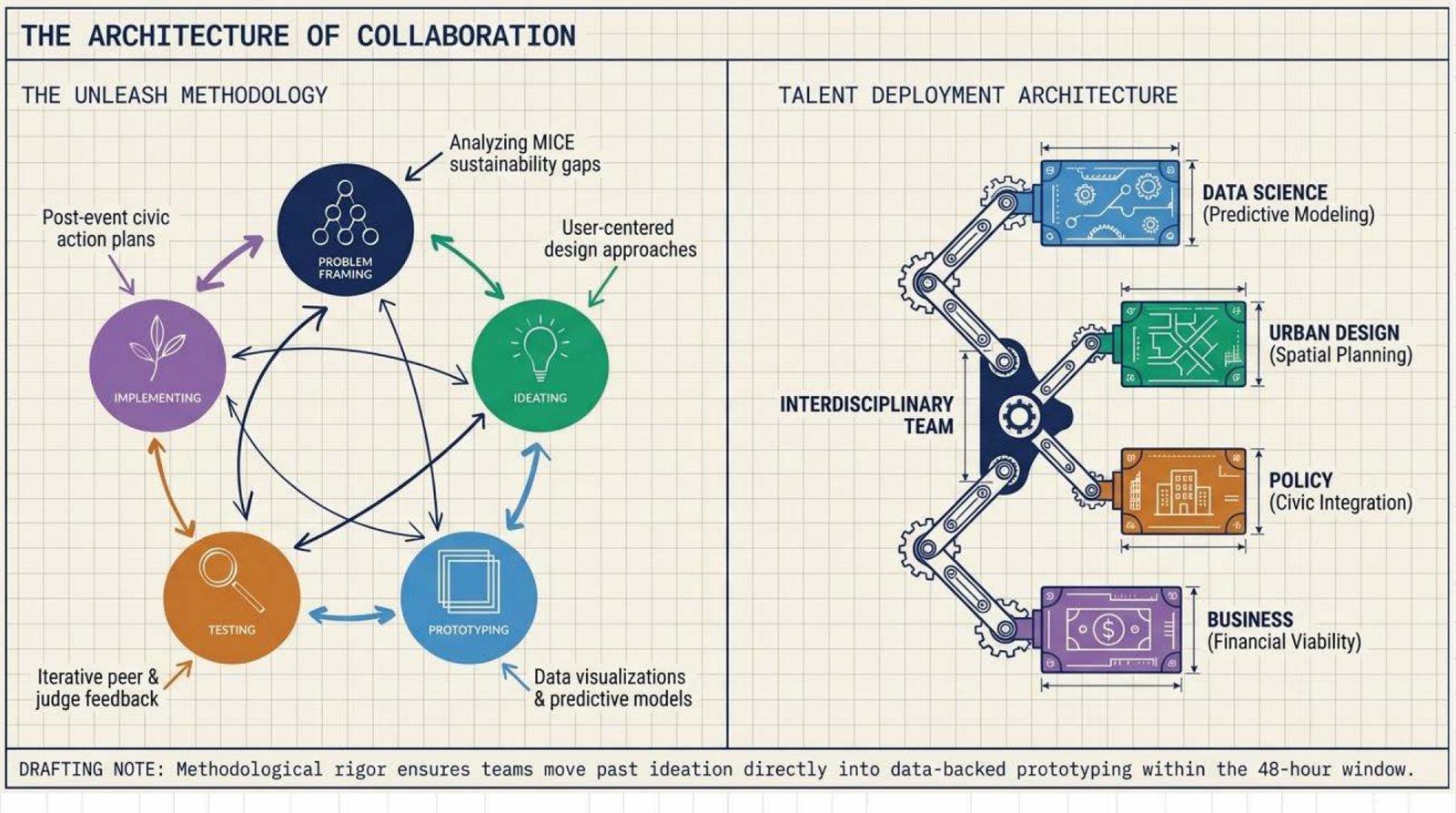
A two-day training lab at The Ion introduces participants to UNLEASH innovation methods, systems thinking, problem framing, ideation, prototyping, and cross-disciplinary collaboration.
Open Training Lab

Platform 3
A data and visualization platform organized around two linked labs: UNLEASH innovation training and a three-month urban sustainability prediction analytics hackathon.
Design brief imagery
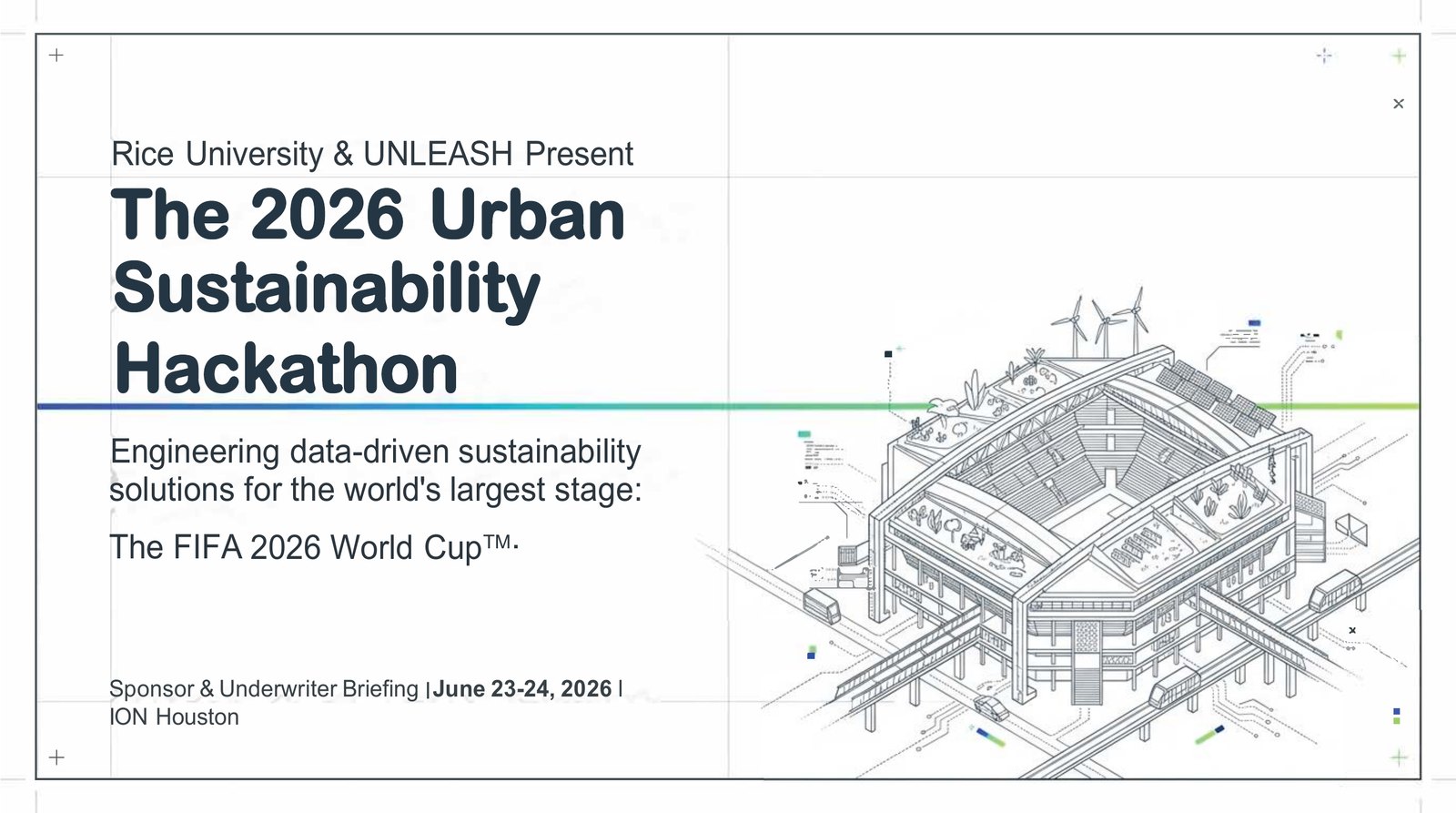
The Hackathon is a blueprint for turning FIFA World Cup 2026 visitor demand into actionable urban resilience. The focal lens pairs stadium infrastructure, climate data, civic systems, and predictive analytics.
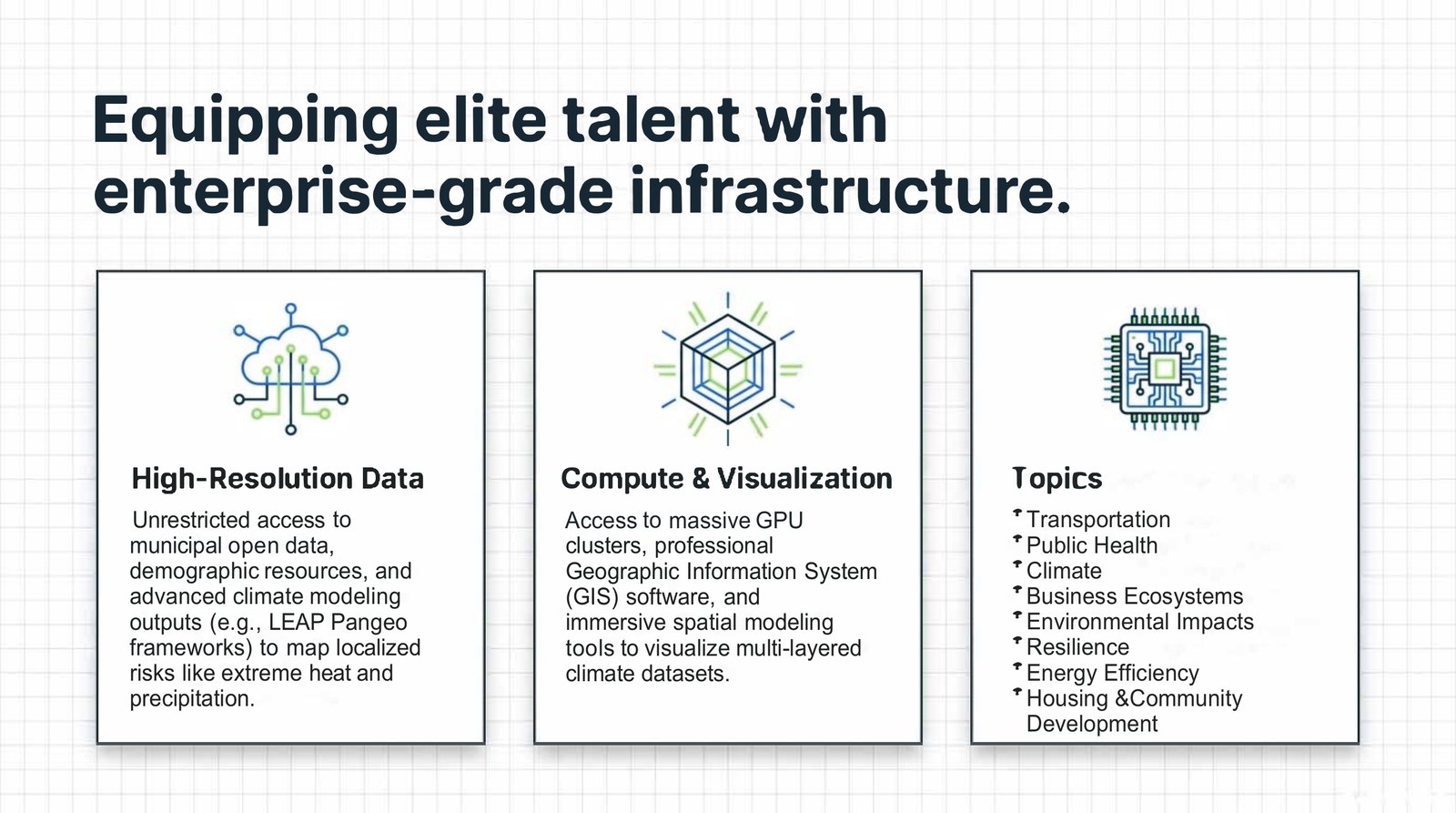
The program model centers on elite talent, civic data, and global policy, with teams using municipal open data, high-resolution climate models, GIS tools, and visualization infrastructure to prototype deployable sustainability interventions.
Two connected labs
The Urban Sustainability Data Analysis platform now features two cages. The first introduces an Innovation Lab Training partnership with UNLEASH from Copenhagen, Denmark. The second frames the Urban Sustainability Prediction Analytics Lab as a three-month hackathon for building data tools around FIFA World Cup 2026 host-city sustainability.
Together, the labs move participants from problem framing and user-centered innovation methods into predictive dashboards, maps, scenarios, and decision-support tools for transportation, resource use, heat, public health, corridors, and future growth districts.
Cage 1
A two-day training lab at The Ion introduces participants to UNLEASH innovation methods, systems thinking, problem framing, ideation, prototyping, and cross-disciplinary collaboration.
Open Training LabCage 2
A three-month online hackathon challenges teams to build predictive analytics, scenario tools, maps, and visualizations for resource optimization across US host cities.
Open Analytics Lab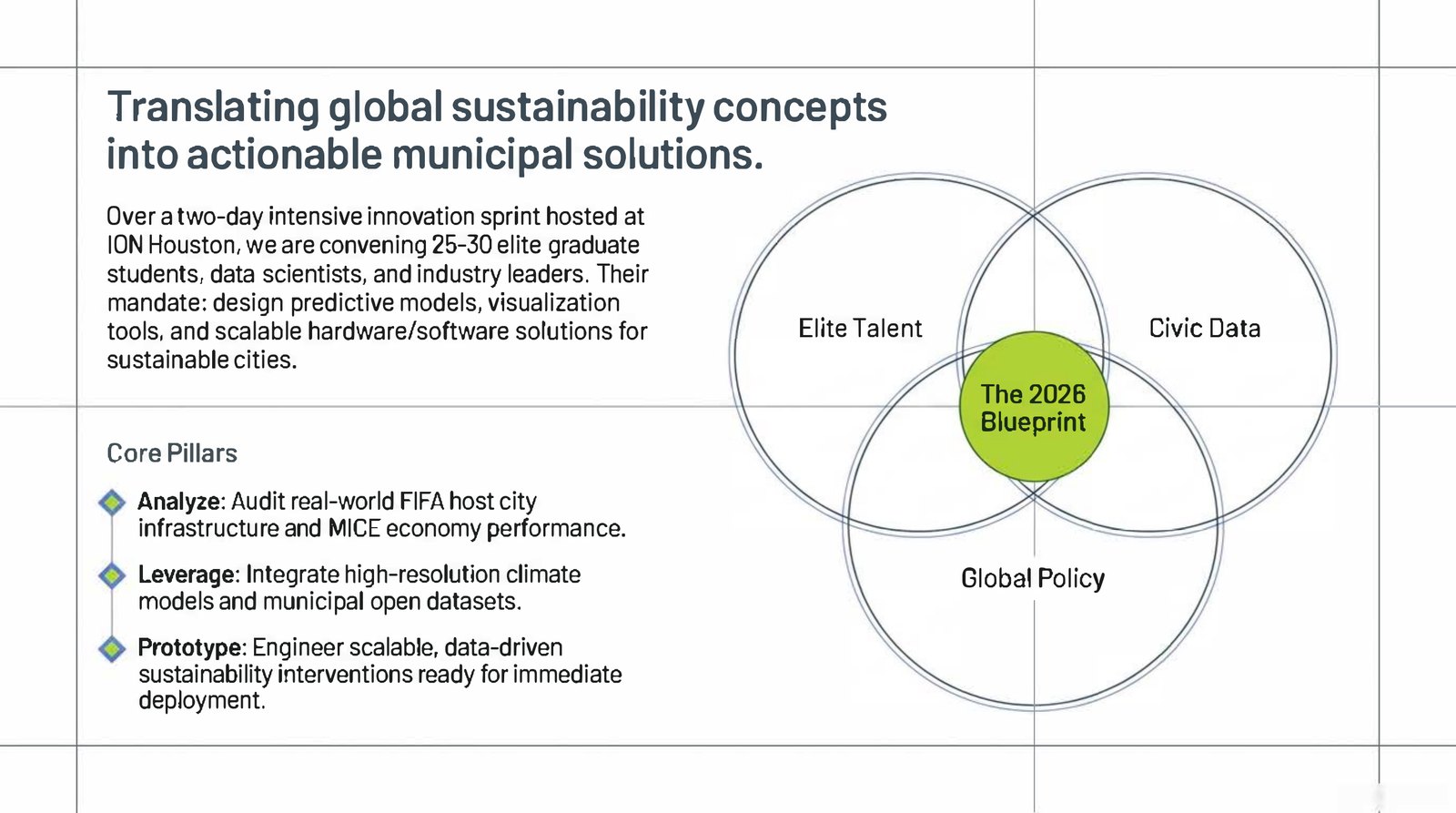
Rice University Urban Sustainability Hackathon: rice-urban-sustainability.devpost.com.